7th Edition of 3D Graphy Engineering & Medical (3D GEM) 2026
Dates: 15th & 16th October 2026
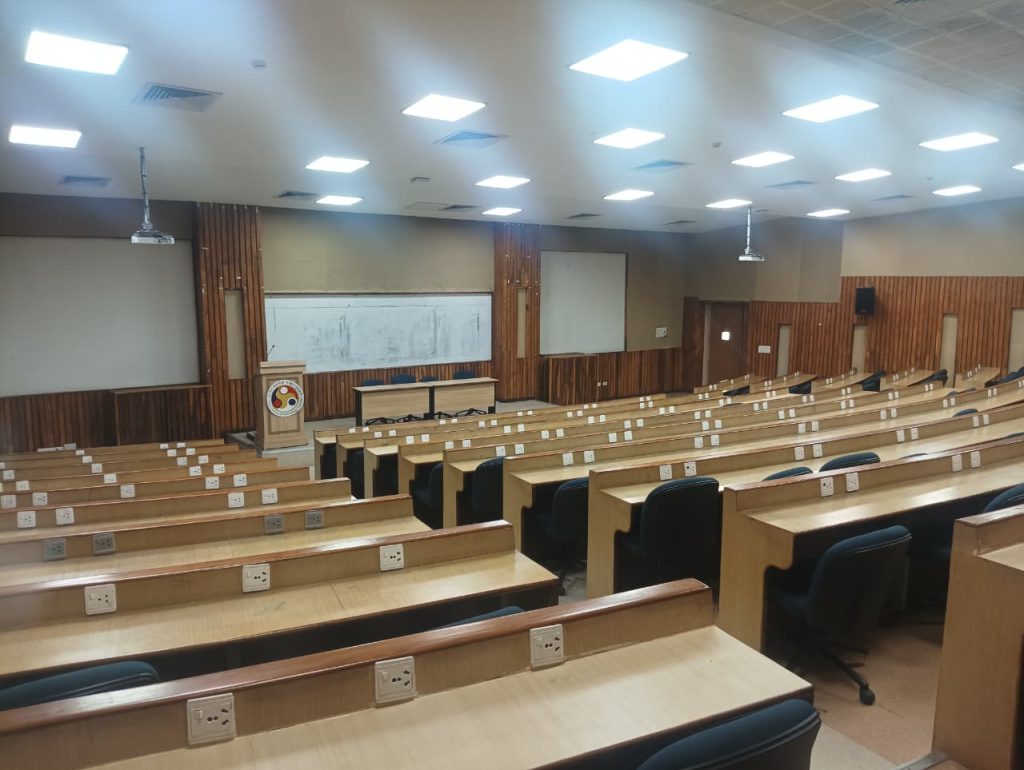
Venue: IIT Guwahati
Timings: 09:30 AM – 6:00 PM
EVENT FOCUS :
3D Printers (Polymer & Metal) | 3D Bioprinters | 3D Scanners | 3D Design & Simulation Software | 3D Printable Materials (Polymers, Metals, Bioinks) | 3D Visualisation (AR, VR, MR, XR) | Digital Twin with Artificial Intelligence
3D Printing & 3D Visualisation in Combination with AR, VR, MR, XR, Digital Twin & Artificial Intelligence
Introduction
The convergence of 3D Printing and 3D Visualisation with AR (Augmented Reality), VR (Virtual Reality), MR (Mixed Reality), XR (Extended Reality), Digital Twin, and Artificial Intelligence (AI) represents the next phase of intelligent product development and immersive engineering ecosystems.
This integration creates a seamless connection between design, simulation, immersive interaction, physical production, and real-time performance monitoring, enabling industries to move from static manufacturing to dynamic, data-driven innovation environments.
1. The Integrated Technology Ecosystem
1.1 3D Printing (Additive Manufacturing)
Enables production of complex geometries directly from digital models with reduced material waste and faster prototyping cycles.
1.2 3D Visualisation
Transforms design data into realistic, interactive models for analysis, simulation, training, and stakeholder communication.
1.3 AR / VR / MR / XR
- AR overlays digital information onto the physical world.
- VR creates immersive digital environments for simulation and training.
- MR blends physical and digital objects for real-time interaction.
- XR serves as an umbrella integrating all immersive technologies.
These tools allow engineers, designers, surgeons, architects, and operators to interact with 3D data before physical production.
1.4 Digital Twin
A live virtual replica of a physical asset or system that continuously updates using sensor data and operational inputs.
1.5 Artificial Intelligence
AI enables predictive analytics, generative design, simulation optimisation, defect detection, and autonomous decision-making.
2. How the Technologies Work Together
- AI-driven Generative Design creates optimised 3D models.
- 3D Visualisation platforms simulate performance and validate design.
- AR/VR/MR/XR environments allow immersive testing and collaborative review.
- The final design is manufactured using 3D Printing.
- A Digital Twin monitors real-world performance.
- AI analyses operational data to refine future designs and processes.
This forms a closed-loop intelligent lifecycle system.
3. Key Benefits
3.1 Immersive Design Validation
- Stakeholders can review full-scale 3D models in VR before production.
- AR assists engineers in identifying design flaws early.
- Reduces costly physical prototypes.
3.2 Faster Product Development
- Virtual simulations reduce testing cycles.
- Real-time collaboration across global teams using XR environments.
- Rapid prototyping through 3D Printing shortens time to market.
3.3 Improved Accuracy & Quality Control
- AI detects anomalies during printing.
- Digital Twin compares real-time data with expected performance.
- AR assists technicians in assembly and inspection.
3.4 Enhanced Training & Skill Development
- VR-based training for machine operators and surgeons.
- MR-guided maintenance support.
- Reduced risk and cost in high-precision industries.
3.5 Predictive Maintenance & Lifecycle Management
- Digital Twin continuously monitors equipment.
- AI predicts wear, failure, and optimisation opportunities.
- Enables proactive maintenance planning.
3.6 Mass Customisation
- Personalised medical implants and prosthetics.
- Custom architectural components.
- Bespoke industrial parts optimised for specific applications.
4. Industry Applications
Engineering & Manufacturing
- Immersive product design reviews
- Smart factories with Digital Twin dashboards
- AI-optimised additive manufacturing
Healthcare
- AR-assisted surgical planning
- VR-based anatomy simulation
- Patient-specific 3D printed implants with Digital Twin monitoring
Architecture & Construction
- Virtual walkthroughs before building
- 3D printed structural components
- Digital Twin-based building performance monitoring
Education & Skill Development
- XR-enabled 3D technology labs
- Immersive engineering curriculum
- Simulation-based innovation platforms
5. Strategic Significance
For emerging technology ecosystems like those promoted through 3D GEM and 3D GRAPHY, this integration:
- Accelerates Industry 4.0 and Industry 5.0 adoption
- Strengthens Indigenous 3D Technology capability
- Encourages start-up innovation in immersive and intelligent systems
- Creates high-value design-to-manufacturing ecosystems in India
Conclusion
The integration of 3D Printing, 3D Visualisation, AR/VR/MR/XR, Digital Twin, and Artificial Intelligence moves industries beyond conventional manufacturing into intelligent, immersive, and predictive environments.
This convergence enables organisations to design smarter, produce faster, train better, maintain proactively, and innovate continuously—creating a sustainable and competitive technological future.
3D GEM is a 3D Technology Consortium formed precisely with the same intent to promote all the 3D Technologies through the 3D GEM 2026 event.
Below is the program schedule for event for both the days
DAY 1 – Thursday, 15th October 2026
Theme: “Smart Manufacturing India: 3D Technology, Artificial Intelligence & Digital Twin Driving Startup-Led industry growth. ”
| Time | Session | Details |
|---|---|---|
| 09:30 AM – 10:45 AM | Inaugural Ceremony | Welcome Address by Convenor Cmde. Niranjan Khardenavis ( Retd), Director, Defence & Marine, 3D Graphy LLP Organiser Address – Introducing 3D GEM 2026. by Dr. Shibu John, CEO & Founder, 3D GRAPHY LLP Patron Address by Director, IIT Guwahati Patron Address Inaugural Address Guest of Honour Address Chief Guest Address Introducing 3D Gem Ambassadors & 3D Graphy Consortium Members Signing of MOU’s. |
| 10:45 AM – 11:30 AM | Inauguration of the Exhibition Booth – Tea Break & Networking | Inauguration of the Exhibition Booth – Meet speakers and exhibitors |
| 11:30 AM – 12:30 PM | Plenary Session I: “Smart Manufacturing India: 3D Technology, Artificial Intelligence & Digital Twin Driving Startup-Led industry growth. 7 mins for each presenters 18 mins for Q & A | – Advances in metal and polymer 3D printing – Emerging biofabrication techniques – Digital twin integration with AI for predictive systems Speakers: Industry leaders & academic pioneers Tech Talk : Moderator – Dr. Sajan Kapil, Assistant Professor, Mechanical Engineering, IIT Guwahati Speakers – TBD |
| 12:30 PM – 01:30 PM | Session 2 : Orthopaedics, Orthotics & Prosthetics 7 mins for each presenters 10 mins for Q & A | The Orthopaedics, Orthotics & Prosthetics session is a specialized session serves as a collaborative platform for biomedical engineers, designers, scientists, researchers, clinicians, technology providers, and end users working across orthopaedic and rehabilitation domains. The workshop will feature participation from companies and experts working in: 3D Printing / Additive Manufacturing, 3D Scanning, Software & Simulation Technologies, 3D Visualisation Technologies – AR, VR, MR, XR, Advanced 3D Printable Materials – Polymers, Metals, Biocompatible resins, Hydroxyapatite, Bone-like materials Biomaterials & Bioprinting – Collagen-based materials, Bioinks, 3D Bioprinters AI-enabled Digital Twin solutions for patient-specific design, surgical planning, and rehabilitation The platform brings together clinical specialists and practitioners, including: Orthopaedic Surgeons, Orthopaedic Oncology Specialists, Arthroplasty Surgeons, Spine Surgeons, Sports Injury & Sports Surgery Specialists Orthotists & Prosthetists Participants will present real-world clinical and rehabilitation challenges, seeking innovative, patient-specific solutions from service providers and technology companies. Moderator – Dr. Ashok Puranik, Executive Director, AIIMS Guwahati. Speakers – Dr. Abhijeet Salunke , Orthopaedic Onco- Surgeon, Gujarat Cancer Research Institute Dr. Jaideep Singh, CTO, Orthotech India Pvt. Dr. Souptick Chanda, Assistant Professor, Department of Bioscience & Bioengineering, IIT Guwahati |
| 01:30 PM –02:15 PM | Lunch Break | Visit to the exhibition stalls and food section |
| 02:15 PM –03:15 PM | Session 3 : Medicine & Healthcare 7 mins for each presenters 11 mins for each presenters | The Medicine & Healthcare is designed as a collaborative platform bringing together researchers, healthcare professionals, technology providers, and end users from across the medical and healthcare ecosystem. The session will feature participation from companies and experts working in: 3D Printing / Additive Manufacturing for medical applications 3D Visualisation Technologies – AR, VR, MR, XR 3D Printable Materials – Polymers, Metals, Biocompatible and Bone-like materials AI-enabled Digital Twin solutions for healthcare and medical engineering. This platform enables end users, including clinicians, hospitals, and healthcare institutions, to present their real-world clinical and operational challenges, seeking effective and innovative solutions from service providers and technology companies. A key highlight of the session is the interactive problem-solving format, followed by a dedicated meeting between service providers and end users, fostering collaborations, translational research, and implementation opportunities. Moderator – TBD Speakers – TBD |
| 03:20 PM – 04:20 PM | Session 4 : Pharma, Food & Drugs 7 mins for each presenters 11 mins for each presenters | The Pharma, Food & Drugs session serves as a multidisciplinary platform bringing together pharmacologists, pharmaceutics experts, biomedical engineers, scientists, researchers, technology providers, and end users from the pharmaceutical, food, and drug development ecosystem. The session will feature participation from companies and experts working in: 3D Printing / Additive Manufacturing for pharma and food applications, 3D Visualisation Technologies – AR, VR, MR, XR Advanced Materials – Polymers, Metals, Biocompatible resins, Hydroxyapatite, Collagen-based materials Bioprinting & Biofabrication – Bioinks, 3D Bioprinters Customized Drug Development – Personalized medicine, drug formulation technologies AI-enabled Digital Twin solutions for drug development, testing, and process optimization The platform enables end users, pharmacists, formulation experts, and industry stakeholders to present real-world challenges and problem statements, seeking innovative, scalable solutions from service providers and technology companies. Moderator – TBD Speakers – Dr. Geetha Manivasagam, Founding Dean, School of Healthcare Science and Engineering ( SHINE), Professor, Vellore Institute of Technology |
| 04:20 PM – 04:45 PM | Tea & Coffee break | Networking and Visit to the Exhibition Stalls |
| 04:45 PM –05:45 PM | 3D Graphy – Industrial Engineering & Medical Tour – IIT Guwahati | A visit to the IIT Guwahati – Orthotech Centre and Engineering and Industrial Manufacturing the Rapid Manufacturing Mechanical Centre. |
DAY 2 – Friday, 16th October 2026
| Time | Session | Details |
|---|---|---|
| 09:15 AM – 10:30 AM | Session 5 : Architecture and Construction 7 mins for each presenters 16 mins for Q & A | The Architecture & Construction session serves as a collaborative platform for architects, civil engineers, interior designers, infrastructure model makers, material scientists, researchers, technology providers, and end users across the built environment ecosystem. The session will feature participation from companies and experts working in: 3D Printing / Additive Manufacturing for construction and architecture 3D Scanning, Software & Simulation Technologies 3D Visualisation Technologies – AR, VR, MR, XR Advanced 3D Printable Materials – Polymers, Concrete, Clay, Cement, and sustainable/green construction materials, Model makers , AI-enabled Digital Twin solutions for infrastructure planning, design, and lifecycle management This platform enables end users from architecture and construction sectors to present their real-world project challenges and problem statements, seeking innovative and scalable solutions from service providers and technology companies. Moderator – Dr. Ar. Prof. Abhay Purohit, Past President, Council of Architecture, Ministry of Education. Speakers – Prof. Arun Giriyapor, Technology Partner, Maya 3D |
| 10:30 AM – 11:00 AM | Tea Break | Explore 3D Printers, Bioprinters, Scanners, AR/VR devices, and materials |
| 11:00 AM – 01:00 PM | Session 6 : Engineering, Electronics & Industrial Manufacturing 7 mins for each presenters 18 mins for Q & A | The Engineering, Electronics & Industrial Manufacturing session is designed as a collaborative platform for material scientists, researchers, technology providers, and end users across core industrial sectors. The session will feature participation from companies and experts working in: 3D Printing / Additive Manufacturing, 3D Scanning Technologies, 3D Software & Simulation 3D Visualisation Technologies – AR, VR, MR, XR, Advanced 3D Printable Materials – Polymers, Metals, Wire-based technologies, AI-enabled Digital Twin solutions for industrial applications The platform brings together end users from diverse industries, including: Heavy Industry, Engineering & Electronics, Industrial Manufacturing, Oil & Gas, Automotive, Shipbuilding, Railways, Defence. Participants will present real-world industrial challenges and problem statements, seeking innovative, scalable solutions from service providers and technology companies. A key highlight of the session is the interactive problem-solving format, followed by a dedicated meeting between service providers and end users, fostering collaboration, technology adoption, and business opportunities. Moderator – Cmde. Niranjan Khardenavis( Retd), Defence & Marine, 3D GRAPHY LLP Special Guest – Er. Bhaben Kalita, Chairman, The Institution of Engineers India, Assam State Centre Er. K Sarkar , Chairman, The Institute of Marine Engineers ( India) Speakers – TBD |
| 01:00 PM – 01:45 PM | Lunch Break | Networking Lunch & Exhibition Visit |
| 01:45 PM – 03:15 PM | Session 7 : Head & Neck 7 mins for each presenters 18 mins for Q & A | The Head & Neck session is a highly specialized session serves as a collaborative platform for biomedical engineers, designers, scientists, researchers, healthcare professionals, technology providers, and end users working in head & neck applications. The session will feature participation from companies and experts working in: 3D Printing / Additive Manufacturing for medical applications, 3D Visualisation Technologies – AR, VR, MR, XR Advanced 3D Printable Materials – Polymers, Metals, Biocompatible resins, Hydroxyapatite, Bone-like materials, Biomaterials & Bioprinting – Bioinks, Collagen-based materials, 3D Bioprinters, AI-enabled Digital Twin solutions for surgical planning and patient-specific care The platform brings together clinical specialists across Head & Neck disciplines, including: Prosthodontists, Maxillofacial & Craniofacial Surgeons, Neurosurgeons & Spine Surgeons, Orthognathic Surgeons Plastic & Reconstructive Surgeons, ENT (Otolaryngology) Specialists Participants will present real-world clinical challenges and case-based problem statements, seeking innovative, patient-specific solutions from service providers and technology companies. A key highlight of the session is the interactive problem-solving format, followed by a dedicated meeting between service providers and end users, enabling meaningful collaborations, translational research, and clinical implementation. Moderator – Dr. Ravi B, Director, NITK Surathkal Speakers – Dr. Ravi Kannan R, Padma Shri, Director of Cachar Cancer Hospital and Research Centre ( CCHRC) |
| 03:15 PM – 04:30 PM | Session 8 : Dental Science 7 mins for each presenters 18 mins for Q & A | The Dental Science is a session which serves as a collaborative platform for dentists, dental surgeons, prosthodontists, orthodontists, implantologists, endodontists, periodontists, designers, scientists, researchers, technology providers, and end users across the dental ecosystem. The session will feature participation from companies and experts working in: 3D Printing / Additive Manufacturing for dental applications 3D Scanning, Software & Simulation Technologies 3D Visualisation Technologies – AR, VR, MR, XR Advanced 3D Printable Materials – Polymers, Metals, Biocompatible resins, Hydroxyapatite, Bone graft materials Biomaterials & Bioprinting – Collagen-based materials, Bioinks, 3D Bioprinters, AI-enabled Digital Twin solutions for treatment planning and patient-specific dentistry The platform brings together specialists across dental disciplines, including: Prosthodontists, Orthodontists, Implantologists, Endodontists, Periodontists Participants will present real-world clinical and workflow challenges, seeking innovative, patient-specific solutions from service providers and technology companies. Moderator – TBD Speakers – TBD |
| 04:30 PM – 05:00 PM | Tea Break | Networking and visiting the exhibition stalls |
| 05:00 PM – 05:45 PM | 3D GEM AWARDS 2026 | Jury Member panel to share the process of validation Poster Presentation Awards National Grand Challenge Awards Design Challenge Awards Special Awards |
| 05:45 PM – 06:00 PM | Valedictory Session & Closing Ceremony | Summary of proceedings, recognitions & felicitation Announcement of 8th edition of 3D GEM 2027 Vote of Thanks |
Concurrent Highlights (Both Days)
- 3D GEM Poster Presentation : Poster presentation with 3D Printing and 3D Visualisation for students and industry.
- Design Challenge : Competition for Design innovation with Design Thinking and using Generative Ai and DfAM.
- National Grand Challenge : Promoting Indigenous 3D technology ( 3D printers, 3D Bioprinters, 3D Software, 3D printable materials, 3D Visualisation – AR, VR, MR, XR, Digital Twin and Ai assets.
- 3D Graphy Exhibition Zone: Latest 3D printers, bioprinters, scanners, materials & XR setups.
- Networking Pavilion: Collaboration opportunities between industry, academia, and medical institutions.
- 3D Graphy Industrial Engineering and Medical Tour – Visit to the Engineering and Industrial Manufacturing Additive Manufacturing Centre and 3D Printing & 3D Visualisation Medical Centre.
Benefits of Attending as a Delegate :
Being a delegate usually means you’ve registered for the full conference experience — including sessions, access to talks, workshops, and deeper involvement in activities.
1. Structured Learning & Expert Insights
Delegates attend keynote sessions, talks, and panel discussions led by industry and academic leaders in 3D technology — covering areas like 3D printing, 3D simulation, 3D design, 3D medical modelling, AR/VR/MR and digital twin applications across sectors.
2. Technical Skills & Hands-On Workshops
Delegates will get demonstration zones that teach practical skills in:
- 3D modelling and scanning
- Additive manufacturing processes (FDM, SLA, SLS, metal AM)
- Digital scanning and visualisation
- Product development workflows
This builds industry-ready expertise.
3. Participation in Competitions & Presentations
As a delegate you can:
- Present in poster sessions
- Join design and innovation challenges
This lets you showcase your own research or projects and gain recognition.
4. Networking with Key Stakeholders
Delegates get structured networking opportunities with:
- Industry leaders
- R&D professionals
- Start-ups and innovators
- Academic experts and recruiters
This can lead to collaborations, internships, partnerships, or job opportunities.
5. Official Documentation & Credentials
Delegate registration often includes:
- Conference participation certificates
- Access to exclusive sessions
6. See Latest Technology in Action
You can visit the exhibition floor to:
- Explore the newest 3D printers, 3D scanners, 3D software, 3D Printable materials
- Experience demos in AR/VR and digital twin technologies
This is great if you’re an end-user, student, or curious professional.
7. Get Inspired & Informed
You can learn about how 3D technologies are applied in:
- Engineering manufacturing
- Medical and dental fields
- Product design and research
This gives broad exposure even without deep involvement.
8. Discover Career or Collaboration Openings
Many organisations and start-ups attend looking for talent or partnerships. A visit could spark future opportunities.
9. Full Access to VIP Lounge, Exhibition, Awards ceremony and a digital copy of the 3D GEM Poster Presentation Abstract Handbook.
You get entry to:
- Delegate will be offered food coupon for food and beverages.
- VIP Lounge for meetings will be offered to delegates with a special coloured green pass for entry.
- A digital copy of the 3D GEM Poster Presentation Abstract Handbook.